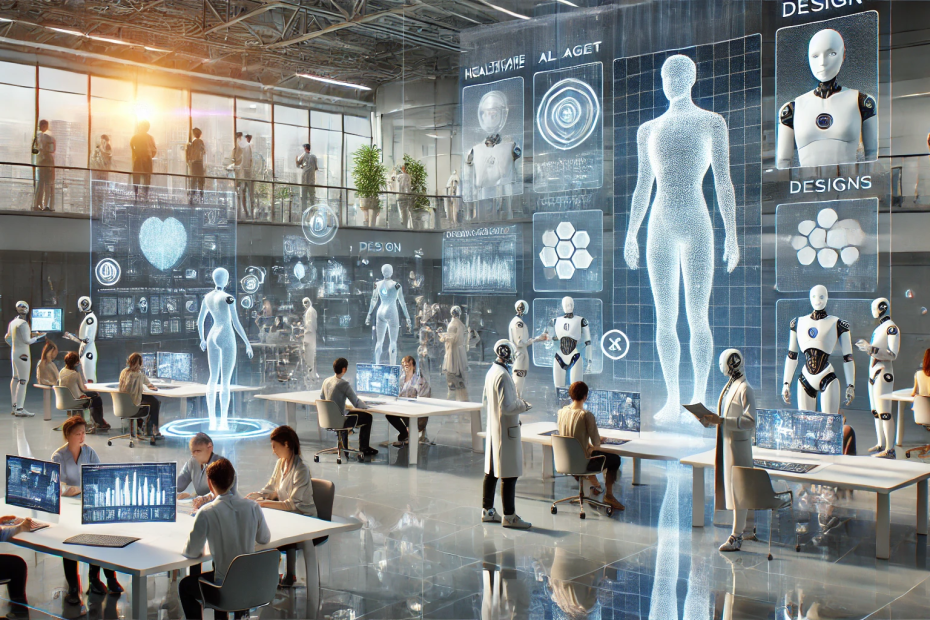
As 2025 emerges as the “Year of AI Agents,” the world stands at the crossroads of an AI revolution. Breakthroughs in autonomous systems, integration capabilities, and process automation have fueled discussions about the transformative potential of AI agents. However, the term “agent” often conflates two distinct paradigms: Task-Oriented Functional Agents and Collaborative Intelligence Agents (or CollaborAgents).
Task-oriented agents excel at automation—streamlining repetitive, well-defined tasks. In contrast, CollaborAgents represent a transformative model of AI-AI and human-AI interaction, designed to augment both artificial and human intelligence and creativity through dynamic collaboration. This paper explores these paradigms, highlights their distinctions, and argues for the revolutionary potential of CollaborAgents to redefine human-AI partnerships.
Additionally, the paper emphasizes not only the collaboration between agents and humans but also the critical importance of inter-agent collaboration, which adds even more layers of synergy and innovation to this model.
To establish a clear framework, we begin with a foundational exploration of what it means to be agentic—a concept critical to understanding both task-oriented agents and CollaborAgents.